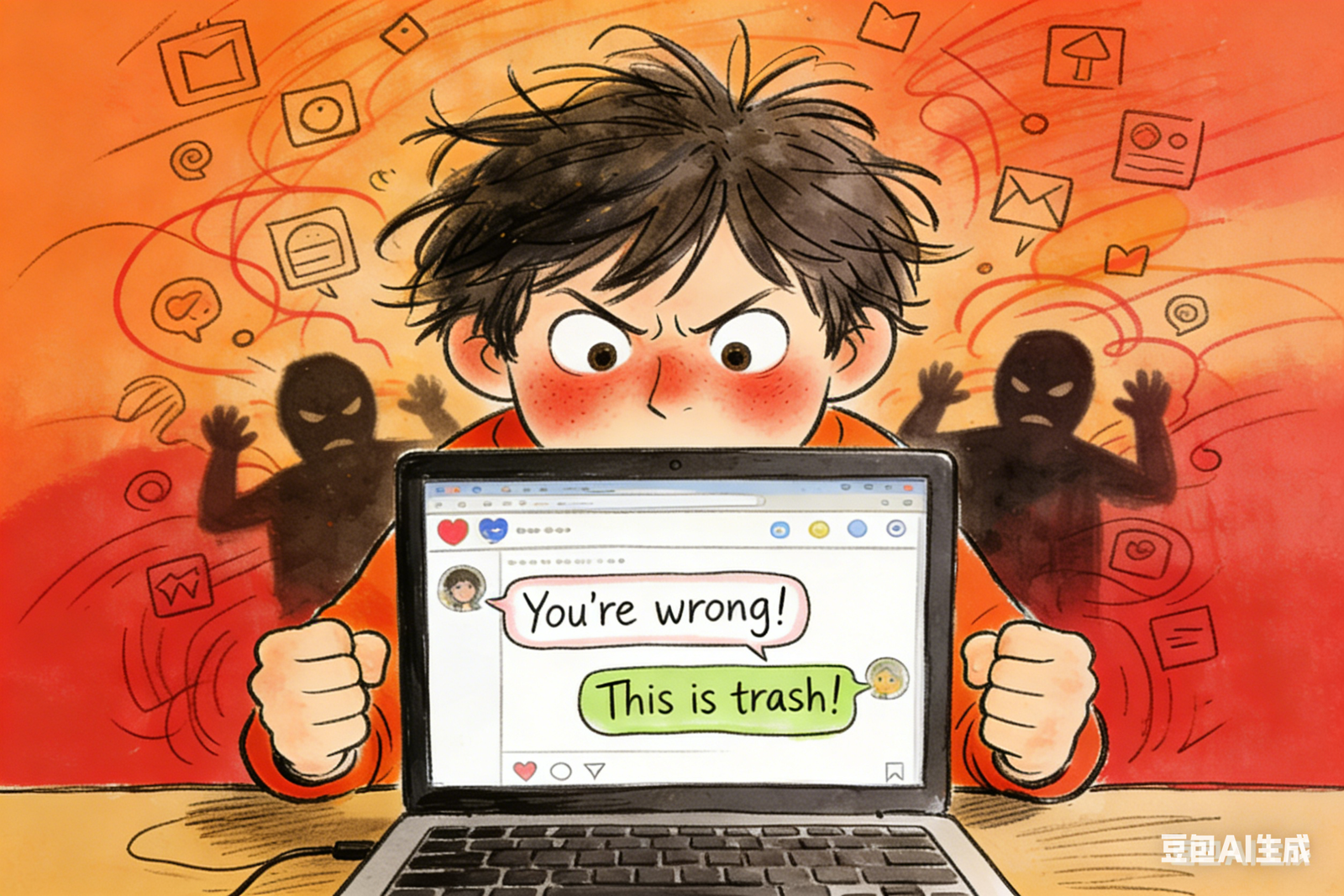
Every year, dictionaries choose a Word of the Year to reflect what people are worried or excited about. This year, the Oxford Dictionary selected:
rage bait
This phrase captures a big problem in today’s internet culture.
What does “rage bait” mean?
rage = anger (愤怒 fèn nù)
bait = a lure or trap (诱饵 yòu ěr)
So rage bait means:
Online content that designed to make you angry, so you will comment, argue, or share it.
Suggested Chinese translations:
引战内容 (yǐn zhàn nèi róng) — content that triggers fights
引愤内容 (yǐn fèn nèi róng) — content that triggers anger
But in a real Chinese context, we prefer to use the “是…的” structure. Or we can use it as an adjective.
Example:
1. 这个视频就是引战的。(Zhège shìpín jiùshì yǐn zhàn de.)
2. 这就是个引战帖。(Zhè jiù shì gè yǐn zhàn tiē.)
Translation: This video is just rage bait.
Why do people create rage bait?
Because anger gets attention.
On social media:
More anger → more comments
More arguments → more traffic
More traffic → more money
In other words when you get angry, somebody else gets paid.
Humans react faster to negative emotions. When you see something unfair, offensive, or shocking, your brain says: “Comment now! Prove them wrong!” But many times the content is designed to make you lose control.
How can we protect ourselves?
A simple checklist:
✔ Think before you comment
✔ Ask: “Is this trying to make me angry?”
✔ Scroll away from low-quality content
✔ Support positive and meaningful posts
✔ Keep your attention for things that matter
Remember: Your attention is valuable. Spend it wisely.
Learning a language is more than memorizing words, but to understand people and the world.
Use Chinese confidently, positively, and wisely.
Study with us SN Mandarin and your best Chinese journey starts here.