The long-anticipated HSK 3.0 exam is officially launching its first-ever global trial on January 31, 2026, which will be a major milestone for Chinese learners worldwide.
Registration for the January trial opened on December 19, 2025, and both paper-based and computer-based versions are available for this pilot test, which will be held simultaneously at authorized centers across Asia, Europe, the Americas, Africa and Oceania.
This new version of China’s standardized proficiency test marks a shift from the old HSK format and will set the stage for future assessments at all levels.
Unlike previous years, where the HSK was a familiar 6-level written exam with optional speaking tests, HSK 3.0 is redesigned to better reflect real-world language ability.
It covers more than just listening and reading as the new framework emphasizes integrated practical skills across listening, reading, writing, speaking and even translation.
What’s Changed
1. Level Structure
Instead of level 1 to 6, learners are now graded on a spectrum that ranges from basic survival Mandarin to advanced mastery:
Elementary: Levels 1–3
Intermediate: Levels 4–6
Advanced: Levels 7–9.
2. Vocabulary Requirements:
HSK 3.0 significantly increases cumulative vocabulary expectations at each stage compared with the old system.
HSK (2.0) > 5000 words
HSK (3.0) ≈11,092 words.
3. Skills Assessed:
While the old HSK primarily focused on listening and reading with some writing components, the new system places strong emphasis on practical language use, including:
Listening comprehension
Reading comprehension
Writing (in increasing depth)
Speaking and translation skills (part of higher–level assessment)
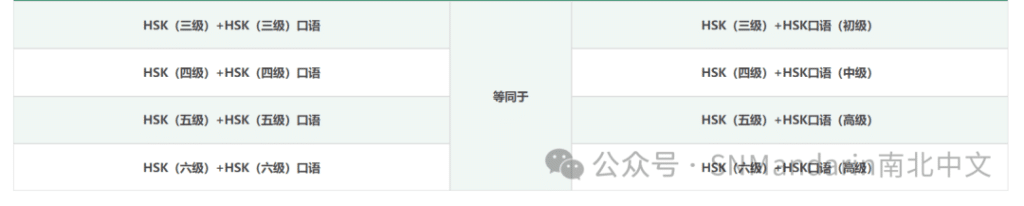
For HSK levels 3–6, registration for the speaking test must be done at the same time.
Key Challenges in HSK 3.0
1. Vocabulary and Contextual Use
HSK 3.0 reorganizes its vocabulary lists to emphasize contextual communication rather than rote memorization of isolated words. Learners should expect:
More real-life words — including modern terms like 扫码 (scan QR code), 网购 (online shopping), and others reflecting everyday life.
Fewer obscure or rarely used items.
2. Vocabulary counts remain cumulative —
Which means higher levels build on all earlier words.
3. Character Recognition vs Handwriting
One major reform is the distinction between character recognition and net handwriting:
HSK 1–4: Character recognition is the emphasis — writing is not strictly required for lower bands
HSK 5+ categories: Handwriting and creative written expression become part of the assessment
This phased approach recognizes the reality that many learners read and type Chinese long before they write fluently by hand, easing early learning pressure.
4. Speaking and Translation Components
In HSK 3.0, spoken Mandarin has more weight.
For Levels 3–6, speaking tests are part of the certification process — a shift from the old system where speaking was often optional or separate.
This underscores the fact that being able to use language in real conversation matters more than ever.
HSK 3.0 is not just another “updated version” but a reimagined proficiency framework that places real communicative ability at the core of Chinese assessment.
If you are aiming to pass or excel in HSK 3.0, focus on mastering vocabulary in context, balanced language skills, and practical communication, because this is what the new exam truly measures.
Effective preparation is no longer about memorizing vocabulary lists or drilling mock exams, it requires systematic learning, guided speaking practice, and clear progression aligned with the new framework.
If you are planning to take the upcoming HSK 3.0 exams or want a clear, structured path under the new system, now is the right time to start. Contact us for course consultation, and let us help you prepare for HSK 3.0 with confidence, clarity, and results.